 Admin
Admin
Understanding the Types of Burns
Before beginning any treatment, it is important to understand the type and severity of the burn. Burns are classified into different degrees based on how deeply the skin is affected:
- First-degree burns: Affect only the outer layer of the skin and cause redness, pain and minor swelling. These are usually safe to treat at home.
- Second-degree burns: Affect deeper skin layers, causing redness, blisters, swelling and more intense pain. Some minor second-degree burns can be treated at home with care.
- Third-degree burns: These are severe, affecting all layers of the skin and possibly tissues beneath. They may appear white, charred or dry. These burns require emergency medical treatment and should not be managed at home.
Immediate Steps for Treating Minor Burns at Home
Quick and calm action helps relieve pain and prevent further damage. Follow these household first aid steps for treating a minor burn:
-
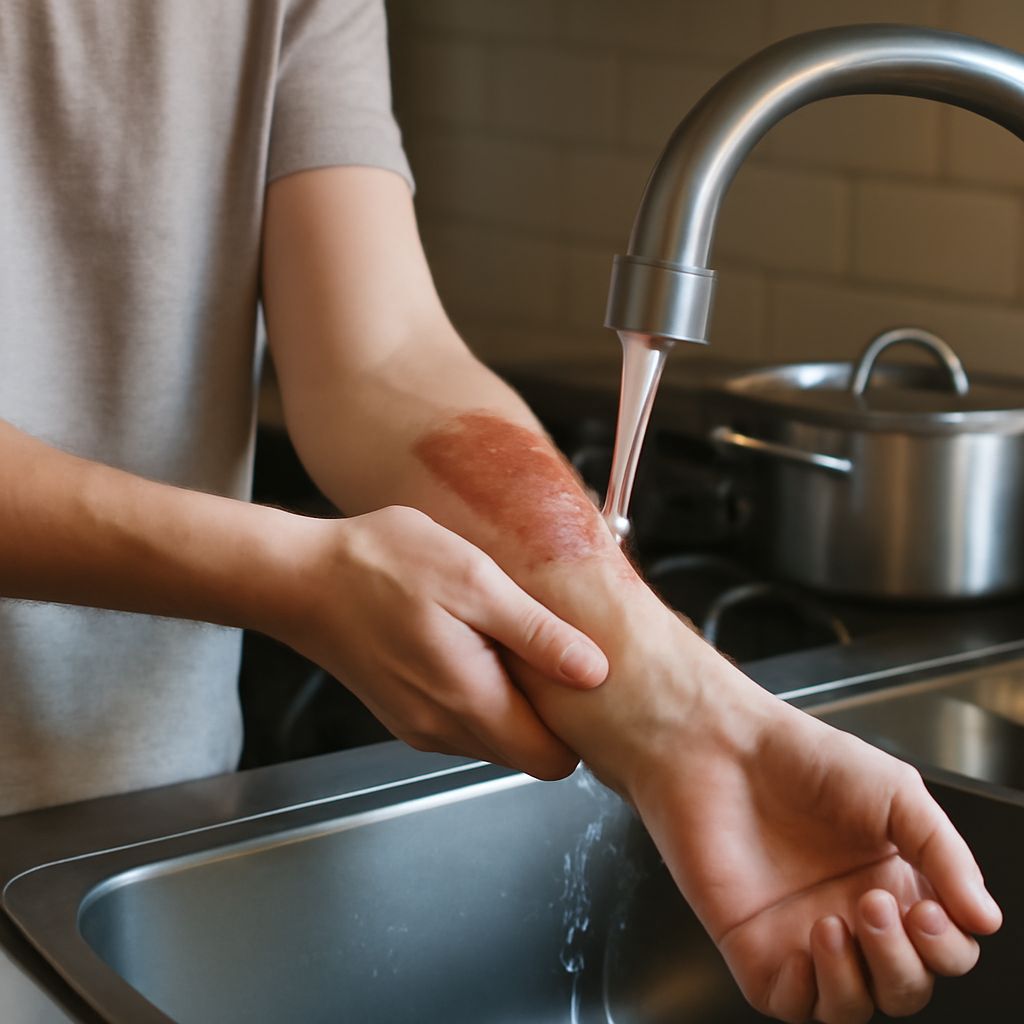
- Cool the area: Hold the burned skin under cool running water for ten to fifteen minutes. Cooling the burn reduces inflammation and stops heat from reaching deeper layers.
- Remove tight objects: If possible, gently remove any rings, bracelets or clothing from the burned area before swelling begins. Avoid touching or pulling anything stuck to the burn.
- Clean the burn: After cooling, wash the area gently with mild soap and water. Avoid scrubbing or using harsh chemicals on the burn.
- Protect the burn: Cover the area with a sterile, non-stick bandage or clean cloth. Change the dressing daily to prevent infection and support healing.
- Use a burn cream: Apply a thin layer of antimicrobial burn ointment or aloe vera gel if available. These help relieve pain and support skin repair.
- Relieve pain: Over-the-counter pain medication such as paracetamol or ibuprofen can help reduce discomfort, swelling and fever if necessary.
What to Avoid When Treating Burns
Some common household remedies and ideas may actually harm the burn or slow healing. When providing first aid for burns at home, remember to avoid the following:
- Do not apply ice directly to the burn as it can damage skin tissue further.
- Do not use butter, oil, toothpaste or raw egg on the burn. These can trap heat, increase the risk of infection or make the injury worse.
- Do not pop blisters. If blisters form, allow them to break naturally to avoid infection and protect the underlying skin.
- Do not use cotton balls or loose fibres, which can stick to the wound and cause irritation.
When to Seek Medical Attention
While many minor burns can be handled at home, certain warning signs mean you should visit a healthcare professional immediately. Seek medical help if you notice:
- The burn is deep and larger than seven centimeters in diameter.
- The burn is on sensitive areas such as the face, eyes, hands, feet or genitals.
- There are signs of infection such as increased pain, redness, swelling or pus.
- The burn does not heal within a few days or gets worse over time.
- The victim is a baby, an elderly person or someone with a weakened immune system.
Additional Tips for Burn Care at Home
To promote comfort and quicker healing, keep the burned area clean and dry when not applying treatment. Drink plenty of fluids, get enough rest and avoid applying pressure on the site. Watch daily for any change in color, pain level or unusual symptoms. A clean environment and prompt care prevent complications and support recovery.
Understanding household treatment for burns can help you stay prepared and act confidently in the face of a minor emergency. By applying the correct first aid techniques, avoiding common mistakes and knowing when to seek help, you can manage small burns at home with both safety and care. Follow the steps outlined in this guide to keep your family protected and ensure a smoother healing process.
Disclaimer
This article is for educational purposes only and does not substitute professional medical advice. If you have concerns about a burn or any health condition, always consult a licensed healthcare provider. Seek immediate emergency assistance in the case of serious or extensive burns.

 Admin
Admin