 Admin
AdminWhat to eat, how much, and why these foods work, backed by clinical research
Your Diet Affects Your Blood Pressure More Than You Think
Nearly half of all adults in the United States have high blood pressure, according to the American Heart Association’s 2024 update. That is roughly 120 million people. Many of them take medication. Fewer of them look at their plate.
Foods that naturally lower blood pressure work through specific mechanisms: increasing potassium intake, providing nitrates that relax blood vessels, reducing inflammation through omega-3 fatty acids, and supplying antioxidants that protect arterial walls. These are not vague health claims. Each food listed below has peer-reviewed research supporting its effect on blood pressure.
This guide covers 10 foods with the strongest evidence behind them. For each one, you will get the specific nutrient responsible, the amount to eat, and a simple way to add the food to your meals today.
1. Leafy Greens

Spinach, kale, Swiss chard, arugula, and collard greens are among the most potassium-dense foods available. Potassium helps your kidneys excrete excess sodium through urine. Since sodium retention is one of the primary drivers of high blood pressure, increasing potassium intake directly counteracts the problem.
One cup of cooked spinach provides about 839 mg of potassium, roughly 18% of the daily recommended intake. One cup of raw kale provides 329 mg.
Daily target: 2 to 3 cups of raw leafy greens, or 1 cup cooked
Easy addition: Add a handful of spinach to your morning eggs or blend kale into a fruit smoothie. The flavor disappears behind banana or mango.
2. Berries

Blueberries, strawberries, and raspberries contain high concentrations of anthocyanins. These are the compounds responsible for the deep red and blue pigments. Anthocyanins improve the function of the endothelium, the inner lining of your blood vessels, which helps vessels dilate and reduces resistance to blood flow.
Blueberries have the strongest evidence. One cup of fresh blueberries contains roughly 150 mg of anthocyanins.
Daily target: 1 cup of fresh or frozen berries
Easy addition: Top your oatmeal with a cup of blueberries at breakfast. Frozen berries work equally well and cost less.
3. Bananas

Bananas are one of the most accessible sources of potassium. A single medium banana contains about 422 mg of potassium. Eating one banana per day contributes roughly 9% of your recommended daily potassium intake.
The convenience factor matters here. You don’t need to cook a banana or prepare anything. Peel and eat. This makes bananas one of the easiest foods that naturally lower blood pressure to add to a busy routine.
Daily target: 1 to 2 bananas
Easy addition: Eat one as a mid-morning snack. Slice one into oatmeal or cereal.
4. Beets

Beets are one of the highest natural sources of dietary nitrates. Your body converts these nitrates into nitric oxide, a molecule that signals blood vessels to relax and widen. Wider blood vessels mean lower resistance and lower blood pressure.
The effect is fast. Research shows measurable blood pressure drops within 3 to 6 hours of consuming beet juice.
Daily target: 1 cup of raw beets, or 250 ml (about 8 oz) of beet juice
Easy addition: Roast beet slices with olive oil and salt as a side dish. If you prefer drinks, blend raw beets with apple and ginger.
5. Garlic

Garlic contains allicin, a sulfur compound released when you crush or chop a clove. Allicin stimulates the production of nitric oxide and hydrogen sulfide, both of which relax blood vessel walls. The effect is strongest with raw or lightly cooked garlic.
Aged garlic extract (available as a supplement) also shows consistent blood pressure benefits in clinical trials, with fewer digestive side effects than raw garlic.
Daily target: 1 to 2 fresh cloves, or 600 to 1,200 mg of aged garlic extract
Easy addition: Crush a clove and let the clove sit for 10 minutes before cooking. This activates the allicin. Add to stir-fries, pasta sauce, or salad dressing.
6. Oats

Oats contain beta-glucan, a type of soluble fiber. Beta-glucan forms a gel in your digestive tract that slows the absorption of cholesterol and helps regulate blood sugar. Both effects indirectly support healthier blood pressure over time by reducing arterial stiffness.
A bowl of cooked oatmeal (about 1 cup dry) provides roughly 4g of beta-glucan. The minimum effective dose in studies is 3g per day.
Daily target: 1 cup of dry oats (cooked), providing about 4g of beta-glucan
Easy addition: Cook rolled oats for breakfast with berries and a sliced banana. You get three blood-pressure-friendly foods in one meal.
7. Fatty Fish

Salmon, mackerel, sardines, and herring are rich in EPA and DHA, two types of omega-3 fatty acids. These fatty acids reduce inflammation in blood vessel walls, decrease triglyceride levels, and improve arterial elasticity. All three effects contribute to lower blood pressure readings.
A 3-ounce serving of Atlantic salmon provides about 1.8g of combined EPA and DHA. The American Heart Association recommends eating fatty fish at least twice per week.
Daily target: Two 3.5-ounce servings of fatty fish per week
Easy addition: Bake salmon with lemon and herbs. Takes 15 minutes at 400°F. Canned sardines on whole grain toast work as a quick alternative.
8. Pomegranates

Pomegranates contain punicalagins and punicic acid, two antioxidants with strong anti-inflammatory properties. These compounds reduce oxidative stress in blood vessel walls and improve endothelial function. The result is better blood flow and reduced arterial pressure.
Pomegranate juice concentrates these compounds. One cup of pure pomegranate juice provides more punicalagins than eating the raw seeds alone.
Daily target: 1 cup (240 ml) of 100% pomegranate juice, or 1/2 cup of fresh seeds
Easy addition: Drink a glass of unsweetened pomegranate juice with lunch. Check the label. Many brands add sugar, which counteracts the benefit.
9. Beans and Lentils

Black beans, kidney beans, chickpeas, and lentils deliver a combination of three nutrients that support blood pressure: potassium, magnesium, and fiber. This triple effect makes legumes some of the most efficient foods that naturally lower blood pressure per serving.
One cup of cooked black beans provides 611 mg of potassium, 120 mg of magnesium, and 15g of fiber. That single serving covers significant portions of your daily needs for all three nutrients.
Daily target: 1/2 to 1 cup of cooked beans or lentils
Easy addition: Add canned chickpeas (rinsed to reduce sodium) to salads. Cook a batch of lentil soup on Sunday and eat portions throughout the week.
10. Dark Chocolate

Dark chocolate with 70% or higher cocoa content contains flavanols. These compounds stimulate nitric oxide production in the endothelium, which relaxes blood vessels. The effect is real but modest, and the serving size matters. More chocolate does not mean more benefit. Excess sugar and calories from large portions negate the advantage.
Daily target: 1 to 2 small squares (about 10 to 20g) of dark chocolate with 70%+ cocoa
Easy addition: Eat one square after dinner as a dessert replacement. Choose brands that list cocoa or cacao as the first ingredient, not sugar.
How to Combine These Foods Into Your Daily Meals
You don’t need to eat all 10 foods every day. Aim for 4 to 5 of them spread across your regular meals. Here is what a sample day looks like.
Breakfast
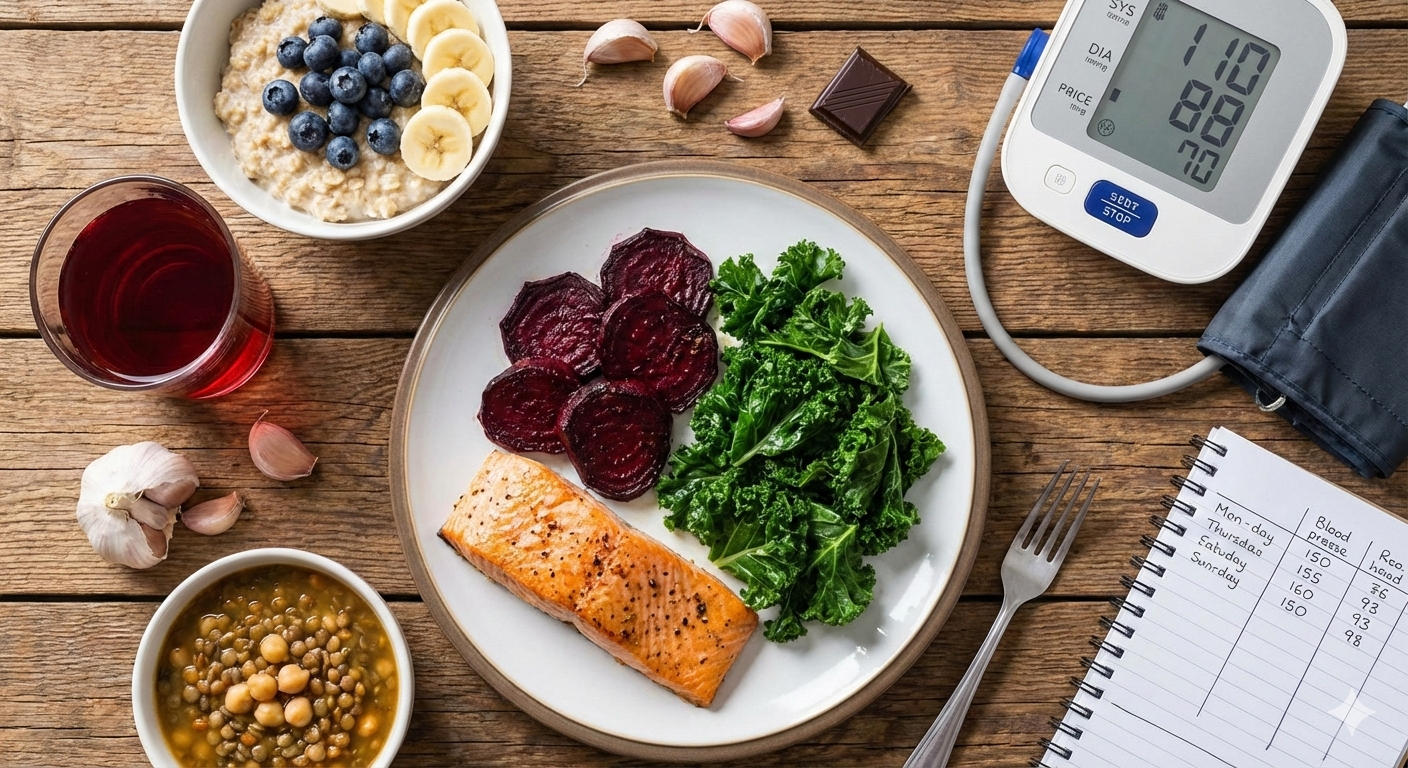
Oatmeal cooked with water, topped with 1 cup of blueberries and half a sliced banana. This covers oats, berries, and bananas in a single meal that takes 8 minutes to prepare.
Lunch
Spinach salad with canned chickpeas (rinsed), cherry tomatoes, olive oil, and crushed garlic dressing. A glass of unsweetened pomegranate juice on the side. This covers leafy greens, beans, garlic, and pomegranate.
Dinner
Baked salmon with roasted beet slices and steamed kale. One square of 85% dark chocolate after the meal. This covers fatty fish, beets, leafy greens, and dark chocolate.
Additional prep time vs. a normal cooking day: Less than 15 minutes
Estimated daily cost of the added ingredients: $4 to $7 depending on your location
What to Reduce at the Same Time
Adding these foods helps. Reducing certain habits helps more. The combination of adding beneficial foods and removing harmful inputs produces the strongest blood pressure reductions.
- Sodium. The American Heart Association recommends no more than 2,300 mg per day, with an ideal target of 1,500 mg for people with hypertension. One teaspoon of table salt contains 2,300 mg. Most excess sodium comes from processed foods, not the salt shaker.
- Processed meats. Bacon, sausage, deli meats, and hot dogs are among the highest sodium foods in the average diet. A single hot dog contains 500 to 700 mg of sodium.
- Alcohol. More than one drink per day for women or two for men raises blood pressure. A 2023 Lancet study found that even moderate alcohol consumption increased systolic blood pressure by 1.3 mmHg per drink per day.
- Added sugars. High sugar intake contributes to weight gain and insulin resistance, both of which raise blood pressure independently of sodium intake.
The DASH Diet: A Proven Framework
Every food on this list aligns with the DASH (Dietary Approaches to Stop Hypertension) eating plan, developed by the National Heart, Lung, and Blood Institute. The DASH diet has more clinical evidence supporting blood pressure reduction than any other dietary pattern.
In the original DASH trial, participants following the plan reduced systolic blood pressure by 11.4 mmHg within 8 weeks. That is comparable to starting a blood pressure medication.
The DASH framework is simple: eat more fruits, vegetables, whole grains, lean protein, and low-fat dairy. Eat less sodium, red meat, added sugars, and saturated fat. The 10 foods in this article fit directly into that framework.
Start With One Change This Week
You do not need to overhaul your entire diet on Monday morning. Pick one food from this list that you already enjoy or find easy to prepare. Add one serving of that food to your daily routine for the next seven days.
The following week, add a second food. By the end of the month, you will have four new blood-pressure-friendly habits built into your normal eating pattern.
Small consistent changes outperform dramatic short-term diets every time. Your blood pressure responds to what you eat repeatedly, not what you eat once. Build the habits that last.

 Admin
Admin