 Admin
AdminLow-impact exercises that loosen stiff joints, strengthen the muscles protecting them, and reduce pain without making things worse.
Why Movement Helps Painful Joints
When your joints hurt, your instinct tells you to stop moving. Rest feels logical. But prolonged inactivity makes joint pain worse over time. Here is why.
Your joints depend on movement to stay healthy. The cartilage lining your joints has no direct blood supply. Cartilage receives nutrients from synovial fluid, the slippery liquid filling the joint capsule. Movement compresses and decompresses the cartilage like a sponge, pulling fresh synovial fluid in and pushing waste products out. Without movement, cartilage starves. It thins, dries, and degrades faster.
The muscles surrounding your joints act as shock absorbers and stabilizers. When you stop moving, those muscles weaken. Weak muscles transfer more impact force directly to the joint surface. Pain increases. You move less. The muscles weaken further. The cycle continues.
A 2017 Cochrane review analyzing 54 studies with over 8,000 participants confirmed that exercise reduces pain and improves function in people with knee and hip osteoarthritis. The review found benefits comparable to over-the-counter pain medications, with fewer side effects.
The key word is gentle. High-impact activities like running, jumping, and heavy weightlifting put excessive stress on compromised joints. Low-impact exercises deliver the same benefits to cartilage, muscles, and synovial fluid without the damaging forces. The 7 exercises in this guide are low-impact, evidence-backed, and safe for most people with joint pain.
How Your Joints Work (And Why They Stiffen)
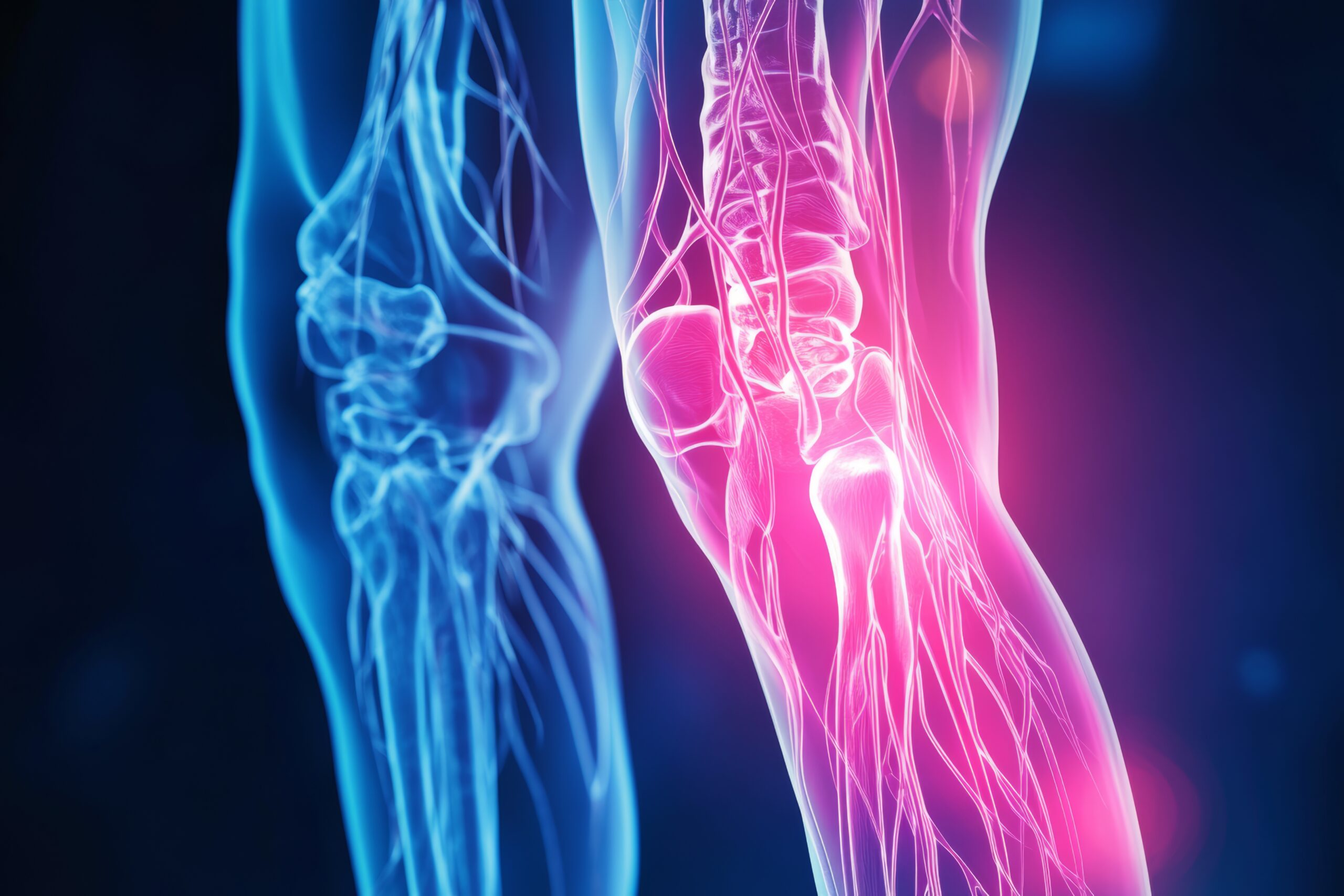
A joint is the point where two bones meet. Synovial joints (your knees, hips, shoulders, fingers, ankles) are the most mobile type. Each synovial joint contains several structures that work together to allow smooth, pain-free movement.
Cartilage is the smooth, rubbery tissue covering the ends of each bone inside the joint. Healthy cartilage allows bones to glide over each other with almost zero friction. Cartilage is about 80% water. When cartilage dries out or thins, the bones beneath come closer together. Friction increases. Pain follows.
Synovial fluid fills the joint capsule. This fluid lubricates the cartilage surfaces and delivers nutrients to the cartilage cells. Your body produces synovial fluid continuously, but production increases with movement. Sitting still for hours reduces synovial fluid circulation. This is why your joints feel stiff after sleeping or sitting for a long time and loosen up after you start moving.
The joint capsule is a fibrous envelope surrounding the joint. Ligaments reinforce the capsule and connect bone to bone. Tendons connect muscles to bone. Together, these soft tissues hold the joint in place while allowing controlled motion.
Muscles crossing the joint control movement and absorb shock. Strong muscles reduce the load on cartilage and bone during daily activities. Weak muscles leave the joint unprotected. Research published in Arthritis Care and Research found that every 10% increase in quadriceps strength reduced the risk of knee osteoarthritis progression by 20 to 30%.
Joint stiffness happens when you stop moving for extended periods. The synovial fluid thickens and distributes unevenly. The joint capsule tightens. Muscles shorten. The first few movements after inactivity feel stiff and uncomfortable because the joint needs movement to redistribute fluid, stretch the capsule, and restore normal function. This is why a warm-up period makes such a noticeable difference.
1. Walking
Walking is the simplest and most accessible exercise for joint health. You need no equipment, no gym membership, and no special training. Every step pumps synovial fluid through your knees, hips, and ankles. Every step activates the muscles supporting those joints.
A 2019 study in the American Journal of Preventive Medicine followed 1,564 adults over age 49 with knee pain or knee osteoarthritis. Participants who walked for exercise had a 40% lower risk of developing new frequent knee pain compared to non-walkers over 4 years. Walking did not worsen existing joint damage in any participant.
Start with 10 to 15 minutes at a comfortable pace on flat terrain. Increase by 5 minutes per week until you reach 20 to 30 minutes daily. Walk on even surfaces (sidewalks, tracks, flat trails) to reduce uneven loading on your joints. Avoid steep hills and rough ground during the first few weeks.
Wear supportive shoes with cushioned soles. Worn-out shoes lose their shock absorption, transferring more impact to your knees and hips. Replace walking shoes every 300 to 500 miles or every 6 to 12 months, whichever comes first.
If outdoor walking is not possible, walk indoors at a mall, gym, or through your home. A treadmill set to a slight incline (1 to 2%) mimics the natural surface variation of outdoor walking and engages your glutes more than walking on a flat belt.
2. Swimming and Water Exercise
Water supports about 90% of your body weight when you stand chest-deep. This buoyancy reduces the compressive load on your joints to a fraction of what they bear on land. You move freely through a full range of motion with minimal pain. For people with severe knee, hip, or spine pain, water exercise is often the only comfortable form of movement.
Water also provides natural resistance. Moving your arms and legs through water requires 12 to 14 times more effort than moving through air. This resistance strengthens muscles without the jarring impact of land-based exercise. You build strength while protecting your joints.
A 2016 Cochrane review of 13 trials involving 1,190 participants found aquatic exercise reduced pain by 6.6 points on a 100-point scale and improved physical function by 5.3 points in adults with knee and hip osteoarthritis. Participants reported improvements within the first 3 to 6 weeks of regular sessions.
Warm water (82 to 88°F / 28 to 31°C) provides additional benefit. The warmth relaxes muscles, increases blood flow, and reduces stiffness before you even start moving. Many community pools and YMCAs offer heated therapy pools specifically for people with joint conditions.
If you do not know how to swim, water walking and water aerobics deliver the same joint benefits without swimming skills. Walk back and forth across the shallow end of the pool. The water resistance challenges your muscles while the buoyancy protects your joints. Many community centers offer group water aerobics classes designed for people with arthritis. Start with 20-minute sessions. Build toward 30 to 45 minutes over several weeks.
3. Cycling
Cycling strengthens the quadriceps, hamstrings, and glutes without the impact forces of walking or running. Your feet move in smooth circular motions. Your body weight is supported by the seat. Your knees bend and extend through a controlled range of motion without absorbing ground-impact forces.
A 2016 study in the Journal of Rheumatology tested a 12-week cycling program for adults with knee osteoarthritis. Participants cycling 3 times per week reduced knee pain scores by 30% and improved functional capacity by 25%. No participant experienced worsening of joint damage on follow-up imaging.
Stationary bikes are ideal for beginners because you control the resistance, speed, and duration. Set the seat height so your knee bends at a slight angle (about 25 to 30 degrees) at the bottom of the pedal stroke. A seat that is too low forces excessive knee flexion. A seat that is too high causes the hips to rock side to side. Both positions strain joints instead of protecting them.
Start with 10 to 15 minutes at low resistance. Increase by 5 minutes per week. Build toward 20 to 30 minutes per session, 3 to 5 times per week. If a standard upright bike causes low back discomfort, try a recumbent bike. Recumbent bikes support your back against a padded seat and distribute your weight more evenly, reducing spinal compression.
Outdoor cycling works too, but carries higher risk of falls and requires navigating terrain changes. If you ride outdoors, choose flat, paved routes. Avoid steep hills until your muscles and joints have adapted to regular cycling over several weeks.
4. Yoga
Yoga combines stretching, strengthening, balance training, and controlled breathing into a single practice. For joint health, yoga gently moves each joint through its full available range of motion. Muscles lengthen. Joint capsules stretch. Synovial fluid circulates. Stiffness decreases.
A 2014 study in the Journal of Rheumatology followed 75 adults with knee osteoarthritis or rheumatoid arthritis through an 8-week yoga program. Participants attended two 60-minute classes per week. The yoga group experienced a 20% improvement in pain, a 20% improvement in physical function, and a 10% improvement in mental health scores compared to the control group. Benefits persisted at the 9-month follow-up.
Not all yoga is gentle. Power yoga, Bikram (hot yoga), and advanced vinyasa flow classes move quickly and include deep joint positions that stress compromised joints. For joint pain, choose gentle yoga, restorative yoga, or chair yoga. These styles move slowly, use props (blocks, straps, blankets) for support, and focus on gradual opening rather than extreme flexibility.
Five Yoga Poses Safe for Most Joint Conditions
Cat-Cow: Start on all fours. Inhale and drop your belly toward the floor while lifting your chest and tailbone (cow). Exhale and round your spine toward the ceiling while tucking your chin and tailbone (cat). Move slowly between positions for 8 to 10 cycles. This warms up the entire spine and promotes fluid circulation in the vertebral joints.
Child’s Pose: Kneel on the floor. Sit your hips back toward your heels. Walk your hands forward on the floor. Rest your forehead on the ground or a folded towel. Hold for 30 to 60 seconds. This gently stretches the hips, knees, and lower back without loading those joints.
Seated Twist: Sit in a chair or on the floor with your legs extended. Cross your right foot over your left knee (or keep both feet on the floor if hip mobility is limited). Place your left hand on your right knee. Rotate your torso to the right. Hold for 20 to 30 seconds. Repeat on the other side. This mobilizes the thoracic spine and stretches the hip rotators.
Supported Bridge: Lie on your back with knees bent and feet flat on the floor. Press your feet into the ground and lift your hips until your body forms a straight line from shoulders to knees. Hold for 10 to 15 seconds. Lower slowly. Repeat 5 to 8 times. This strengthens glutes, hamstrings, and core muscles that support the hips, knees, and lower back.
Standing Side Stretch: Stand with feet hip-width apart. Raise your right arm overhead. Lean your torso gently to the left until you feel a stretch along your right side. Hold for 20 seconds. Repeat on the other side. This opens the shoulder joint and stretches the muscles along the ribcage and spine.
5. Tai Chi
Tai chi is a Chinese martial art practiced as a series of slow, flowing movements combined with deep breathing. Each movement transitions smoothly into the next. The pace is slow enough that your joints move without sudden force or impact. Your weight shifts continuously from one leg to the other, strengthening the muscles around your hips, knees, and ankles.
Tai chi has more published research supporting its use for joint pain than any other mind-body exercise. A 2016 study in the Annals of Internal Medicine compared tai chi to standard physical therapy for knee osteoarthritis. After 12 weeks, tai chi produced the same degree of pain reduction and functional improvement as physical therapy. Tai chi participants also reported greater improvements in depression and quality of life.
A 2019 meta-analysis in the journal Medicine analyzed 18 randomized controlled trials with over 2,000 participants. Researchers found tai chi reduced pain by 15 to 20% and improved physical function by 12 to 18% in adults with osteoarthritis. Benefits appeared within 4 to 8 weeks of regular practice.
Tai chi also improves balance, reducing fall risk. Falls are a major concern for people with joint pain because joint instability and weak muscles increase the likelihood of losing balance. A 2017 study in the Journal of the American Geriatrics Society found tai chi reduced fall risk by 43% in older adults over 6 months of practice.
Start with a beginner tai chi class at a community center, YMCA, or senior center. Many instructors teach “tai chi for arthritis” programs specifically designed for people with joint conditions. Online video courses are also available. Practice 2 to 3 times per week for 30 to 45 minutes. Most people notice reduced stiffness and improved balance within the first month.
6. Resistance Band Exercises
Strong muscles protect joints. Resistance bands provide a safe way to build that strength without the joint stress of heavy weights. Bands create progressive resistance: the further you stretch the band, the harder the exercise becomes. Your muscles work against the resistance. Your joints stay in controlled, stable positions throughout the movement.
Resistance bands come in different strengths (usually color-coded). Start with the lightest band available. You should feel your muscles working by the end of each set, but the movement should never cause joint pain. Progress to the next resistance level after 2 to 3 weeks of comfortable use.
Four Resistance Band Exercises for Joint Health
Seated Leg Extension (Knees): Sit in a sturdy chair. Loop the band around your right ankle and the front chair leg. Straighten your right leg slowly against the band’s resistance. Hold for 2 seconds at full extension. Lower slowly. Complete 10 to 12 repetitions. Switch legs. This strengthens the quadriceps, the muscle group most important for knee joint protection. A 2015 study in Arthritis Care and Research found that stronger quadriceps reduced the risk of knee cartilage loss by 25% over 30 months.
Standing Hip Abduction (Hips): Tie the band in a loop around both ankles. Stand near a wall or chair for balance. Lift your right leg straight out to the side against the resistance. Hold for 2 seconds. Return slowly. Complete 10 to 12 repetitions per leg. This strengthens the gluteus medius, the hip muscle responsible for pelvis stability during walking. Weak gluteus medius muscles cause the pelvis to drop during each step, increasing stress on the hip and knee joints.
Seated Row (Shoulders and Upper Back): Sit on the floor with legs extended in front of you. Loop the band around your feet. Hold one end of the band in each hand. Pull your hands toward your ribcage, squeezing your shoulder blades together. Hold for 2 seconds. Release slowly. Complete 10 to 12 repetitions. This strengthens the muscles supporting your shoulder joints and thoracic spine, reducing rounded-shoulder posture that contributes to shoulder impingement.
Bicep Curl (Elbows): Stand on the middle of the band. Hold one end in each hand with palms facing forward. Curl your hands toward your shoulders. Lower slowly. Complete 10 to 12 repetitions. This strengthens the muscles crossing the elbow joint, improving grip strength and reducing strain during daily lifting tasks.
Do 2 to 3 sets of each exercise. Rest 30 to 60 seconds between sets. Perform resistance band exercises 2 to 3 times per week with at least one rest day between sessions. Muscles need 48 hours to recover and rebuild after resistance training.
7. Stretching
Stretching maintains the range of motion in your joints. Tight muscles pull joints into compressed or misaligned positions. When you stretch consistently, muscles return to their normal resting length. The joint moves more freely. Stiffness decreases. Pain decreases.
A 2019 study in the Journal of Physical Therapy Science found that adults with knee osteoarthritis who stretched daily for 8 weeks improved their range of motion by 12 degrees and reduced pain scores by 25% compared to a control group.
Hold each stretch for 20 to 30 seconds. Breathe slowly and deeply through the hold. Do not bounce. Bouncing triggers the stretch reflex, causing the muscle to tighten instead of lengthen. Ease into each stretch until you feel a gentle pulling sensation. Stop before you feel sharp pain.
Daily Stretching Routine for Joint Health
Hamstring Stretch: Sit on the edge of a chair. Extend your right leg straight in front of you with the heel on the floor and toes pointing up. Keep your back straight. Lean forward from the hips until you feel a stretch behind your right thigh. Hold for 25 seconds. Switch legs. Tight hamstrings pull on the pelvis and increase pressure on the knee joint. Lengthening them reduces both knee and lower back strain.
Quadriceps Stretch: Stand near a wall for balance. Bend your right knee and bring your right heel toward your buttock. Grab your right ankle with your right hand. Keep your knees together and your standing leg slightly bent. Hold for 25 seconds. Switch legs. Tight quadriceps compress the kneecap against the femur. Stretching them reduces this compression.
Calf Stretch: Stand facing a wall. Place both hands on the wall at shoulder height. Step your right foot back about 2 feet. Keep your right heel on the floor and your right leg straight. Bend your left knee and lean into the wall until you feel a stretch in your right calf. Hold for 25 seconds. Switch legs. Tight calves restrict ankle mobility, altering your walking pattern and increasing stress on your knees and hips.
Hip Flexor Stretch: Kneel on your right knee with your left foot flat on the floor in front of you. Press your hips forward gently until you feel a stretch across the front of your right hip. Hold for 30 seconds. Switch sides. Tight hip flexors tilt your pelvis forward, increasing lower back compression and altering hip mechanics.
Shoulder and Chest Stretch: Stand in a doorway. Place your right forearm on the doorframe at shoulder height. Step through the doorway until you feel a stretch across your chest and front shoulder. Hold for 25 seconds. Switch sides. This stretch opens the shoulder joint and counteracts the forward-shoulder position from sitting.
Stretch daily. Morning stretching loosens overnight stiffness. Evening stretching reduces tension accumulated through the day. If you only stretch once daily, choose the time when your joints feel most stiff.
Your Weekly Plan
This plan gives your joints daily movement while allowing your muscles adequate recovery between strengthening sessions.
Monday: 20 to 30 minutes of walking. Daily stretching routine (10 minutes).
Tuesday: Resistance band exercises, 2 to 3 sets of each exercise. Daily stretching routine.
Wednesday: 20 to 30 minutes of swimming or water exercise. Daily stretching routine.
Thursday: Resistance band exercises, 2 to 3 sets of each exercise. Daily stretching routine.
Friday: 20 to 30 minutes of cycling (stationary or outdoor). Daily stretching routine.
Saturday: Yoga class or home practice (30 to 45 minutes). Daily stretching routine.
Sunday: Tai chi class or gentle walk. Daily stretching routine.
This is a template. Swap activities based on your preferences, access, and how your joints feel on any given day. If your knees are flaring on Wednesday, switch from walking to swimming. If your shoulders are stiff on Thursday, focus on upper body stretching instead of resistance bands. Flexibility within the plan keeps you moving consistently without aggravating active symptoms.
Before and After Every Session
How you start and end each exercise session affects how your joints respond.
Before Exercise: Warm Up
Cold muscles and stiff joints absorb force poorly. A 5-minute warm-up increases blood flow to the muscles, raises tissue temperature, and promotes synovial fluid circulation in the joints. Walk slowly for 3 to 5 minutes. Do gentle arm circles and leg swings. Move each major joint through its comfortable range of motion before adding any resistance or intensity. Your joints should feel looser at the end of the warm-up than at the beginning. If they do not, extend the warm-up by another 2 to 3 minutes.
After Exercise: Cool Down
Stopping abruptly after exercise leaves metabolic waste products (lactic acid, hydrogen ions) concentrated in your muscles. These waste products contribute to post-exercise soreness and joint stiffness. A 5-minute cool-down consisting of slow walking and gentle stretching helps your circulatory system flush these waste products from the tissue. Stretch each major muscle group for 20 to 30 seconds during your cool-down. Your muscles are warmest and most receptive to stretching immediately after exercise.
After Exercise: Apply Heat or Cold if Needed
If a joint feels achy or mildly swollen after exercise, apply a cold pack wrapped in a towel for 15 to 20 minutes. Cold reduces post-exercise inflammation and numbs pain receptors. If a joint feels stiff without swelling, apply a warm towel or heating pad for 15 to 20 minutes. Warmth relaxes tight muscles and promotes blood flow. Do not apply heat to a visibly swollen or red joint. Heat increases blood flow and worsens active inflammation.
Reading Your Pain Signals
Not all joint discomfort during exercise is a reason to stop. Learning to distinguish between normal exercise sensations and warning signals keeps you safe while staying active.
Normal during exercise: Mild achiness in the muscles surrounding the joint. A feeling of tightness that loosens after 5 to 10 minutes of movement. Mild fatigue in the working muscles toward the end of a set. These sensations indicate your muscles are working. Continue the exercise.
Stop immediately: Sharp pain inside the joint. Sudden onset of pain during a specific movement. A catching, locking, or grinding sensation within the joint. Pain that causes you to limp or alter your movement pattern. Swelling developing during the session. These sensations indicate joint irritation or tissue damage. Stop the exercise. Apply cold. Rest the joint. If symptoms persist beyond 48 hours, see a doctor.
The 2-hour rule: Mild post-exercise soreness is normal and resolves within 1 to 2 hours. If your joint pain worsens after exercise and persists for more than 2 hours, the session was too intense, too long, or included movements your joint is not ready for. Reduce the duration, intensity, or range of motion in your next session. The 2-hour rule is the most reliable self-assessment tool for people exercising with joint conditions. The Arthritis Foundation uses this guideline in their exercise recommendations.
How Body Weight Affects Your Joints
Body weight has a direct, measurable impact on joint loading. Your knees and hips bear the largest loads because they support your entire body during standing, walking, and stair climbing.
During normal walking, your knees absorb about 1.5 times your body weight with each step. During stair climbing, the force increases to 3 to 4 times body weight. For a 200-pound person, each step on a staircase loads the knees with 600 to 800 pounds of compressive force.
A 2005 study in Arthritis and Rheumatism followed 142 overweight adults with knee osteoarthritis through a weight loss program. Researchers found that every 1 pound of body weight lost removed approximately 4 pounds of compressive force from the knee per step. A 10-pound weight loss eliminated 40 pounds of knee force per step. Over a day of normal walking (roughly 5,000 to 7,000 steps), this adds up to tens of thousands of pounds of reduced joint loading.
Maintaining a healthy body weight is one of the most protective things you do for your joints. Combining the gentle exercises in this guide with a balanced, calorie-appropriate diet supports both joint health and weight management simultaneously. Walking, swimming, and cycling all burn calories while protecting your joints from impact damage.
When to See a Doctor
Gentle exercise helps most people with joint stiffness, mild pain, and early arthritis. Some joint conditions require medical evaluation and treatment beyond home exercise. See a doctor if you experience any of the following.
Joint pain persisting for more than 2 weeks despite rest, gentle movement, and home care. A joint that is visibly red, hot to the touch, or significantly swollen. Grinding, catching, or locking sensations inside the joint during movement. Joint pain limiting your ability to perform daily activities like walking, dressing, or climbing stairs. Pain waking you from sleep. Fever alongside joint pain, which suggests possible infection or inflammatory arthritis. Sudden, severe joint pain without an obvious injury, which warrants prompt evaluation.
A doctor evaluates your joint through physical examination, imaging (X-ray, MRI), and blood work if inflammatory conditions are suspected. Early diagnosis leads to better outcomes for nearly every joint condition. Physical therapy, prescription medications, injections, and in some cases surgical options address joint problems that home exercise alone does not resolve.
Ask your doctor or physical therapist which exercises from this guide are appropriate for your specific condition. Some joint problems benefit from specific movement modifications. A physical therapist tailors the exercises to your individual needs and monitors your progress over time.
Start This Week
Your joints need movement. Not intense movement. Not painful movement. Gentle, consistent, daily movement.
Start with one exercise from this guide. Choose the one that feels most manageable for your current pain level. If your knees hurt, try swimming or cycling. If you have access to a park or sidewalk, walk for 15 minutes tomorrow morning. If your joints are stiff and your balance feels uncertain, look up a beginner tai chi or chair yoga class in your area.
Add a second exercise next week. Add daily stretching the week after. Build your weekly routine gradually over a month. Your joints adapt to movement progressively. Doing too much too quickly creates flares. Doing a little consistently builds strength, restores flexibility, and reduces pain over weeks and months.
Most people feel reduced morning stiffness within the first 1 to 2 weeks of daily gentle exercise. Measurable improvements in pain and function take 4 to 8 weeks of consistent effort. Lasting benefits require ongoing activity. Exercise is not a one-time treatment. Exercise is daily joint maintenance.
Your joints carried you this far. Give them what they need to keep going. Start this week.
Frequently Asked Questions
How often should I exercise for joint health?
Aim for 20 to 30 minutes of gentle movement most days of the week. The Arthritis Foundation recommends 150 minutes of moderate activity per week for people with joint conditions. Daily short sessions produce better results than occasional long workouts. If 20 minutes feels like too much initially, start with 10 minutes and increase by 5 minutes each week. Consistency matters more than session length.
Are these exercises safe for people with arthritis?
Yes. The American College of Rheumatology recommends low-impact exercise as a core part of arthritis management for both osteoarthritis and rheumatoid arthritis. Walking, swimming, yoga, and tai chi all have strong research supporting their safety and effectiveness. A 2017 Cochrane review confirmed exercise produces pain reduction comparable to over-the-counter medications in people with knee and hip osteoarthritis. Start slowly. Listen to your body. Consult your doctor before beginning a new exercise program if you have severe joint damage, active inflammation, or recent joint surgery.
Do I need special equipment?
Most exercises in this guide require no equipment. Walking requires supportive, cushioned shoes. Swimming requires pool access. Resistance band exercises require a light resistance band costing about $5 to $15 at most sporting goods stores or online. A yoga mat adds comfort for floor exercises, but a carpet or folded towel works as a substitute. Tai chi requires no equipment at all.
Should I exercise when my joints hurt?
Mild stiffness and achiness often improve with gentle movement. Morning stiffness lasting less than 30 minutes typically resolves after a warm-up and some easy range-of-motion activity. If a joint is actively inflamed (red, hot, visibly swollen), reduce your exercise intensity or focus on range-of-motion movements only. Sharp pain during exercise means stop that movement immediately. Use the 2-hour rule: if joint pain persists more than 2 hours after your exercise session, the session was too intense. Reduce the duration or intensity next time.
Which exercise is best for knee pain?
Swimming and cycling provide the best combination of strengthening and pain relief for knee conditions. Both work the quadriceps and hamstrings (the muscles supporting the knee) without ground-impact forces. A 2016 study in the Journal of Rheumatology found cycling reduced knee pain by 30% and improved function by 25% in adults with knee osteoarthritis over 12 weeks. Water exercise is particularly effective for severe knee pain because buoyancy eliminates nearly all body-weight loading on the joint.
Does body weight affect joint pain?
Yes. Every 1 pound of body weight creates roughly 4 pounds of compressive force on the knees during walking. A 2005 study in Arthritis and Rheumatism found that losing just 1 pound of body weight removed approximately 4 pounds of knee force per step. Over 5,000 to 7,000 daily steps, this reduction is significant. Maintaining a healthy weight is one of the most effective long-term strategies for reducing knee and hip joint pain.
When should I see a doctor about joint pain?
See a doctor if joint pain persists for more than 2 weeks despite rest and home care. If a joint is red, hot, or significantly swollen. If you experience grinding, locking, or catching sensations inside the joint. If joint pain limits your daily activities. If pain wakes you from sleep. If you have fever alongside joint pain. Early diagnosis leads to better treatment outcomes for most joint conditions.
How long before I feel improvement from exercise?
Most people feel reduced morning stiffness and mild pain relief within the first 1 to 2 weeks of daily gentle exercise. Measurable improvements in pain scores and physical function take 4 to 8 weeks of consistent activity, based on the clinical trial timelines cited throughout this guide. Lasting benefits require ongoing, sustained activity. Stopping exercise leads to a gradual return of stiffness and pain over weeks.


 Admin
Admin


1 comment
Nice write up very helpful