 Admin
AdminSleep is a biological requirement for survival. Your body performs vital maintenance while you rest. Most people focus on the total number of hours they spend in bed. Total time is a poor metric for health. You must focus on sleep architecture. This term describes the structure and organization of your rest phases. Every night follows a specific pattern. Your brain moves through distinct cycles. These cycles repeat every ninety minutes. A healthy night includes five full cycles. Disrupting these cycles leads to chronic fatigue. Master your sleep architecture to improve your cognitive performance. Master your cycles to support your physical recovery. This guide explains the mechanics of rest.
The Four Phases of the Human Sleep Cycle
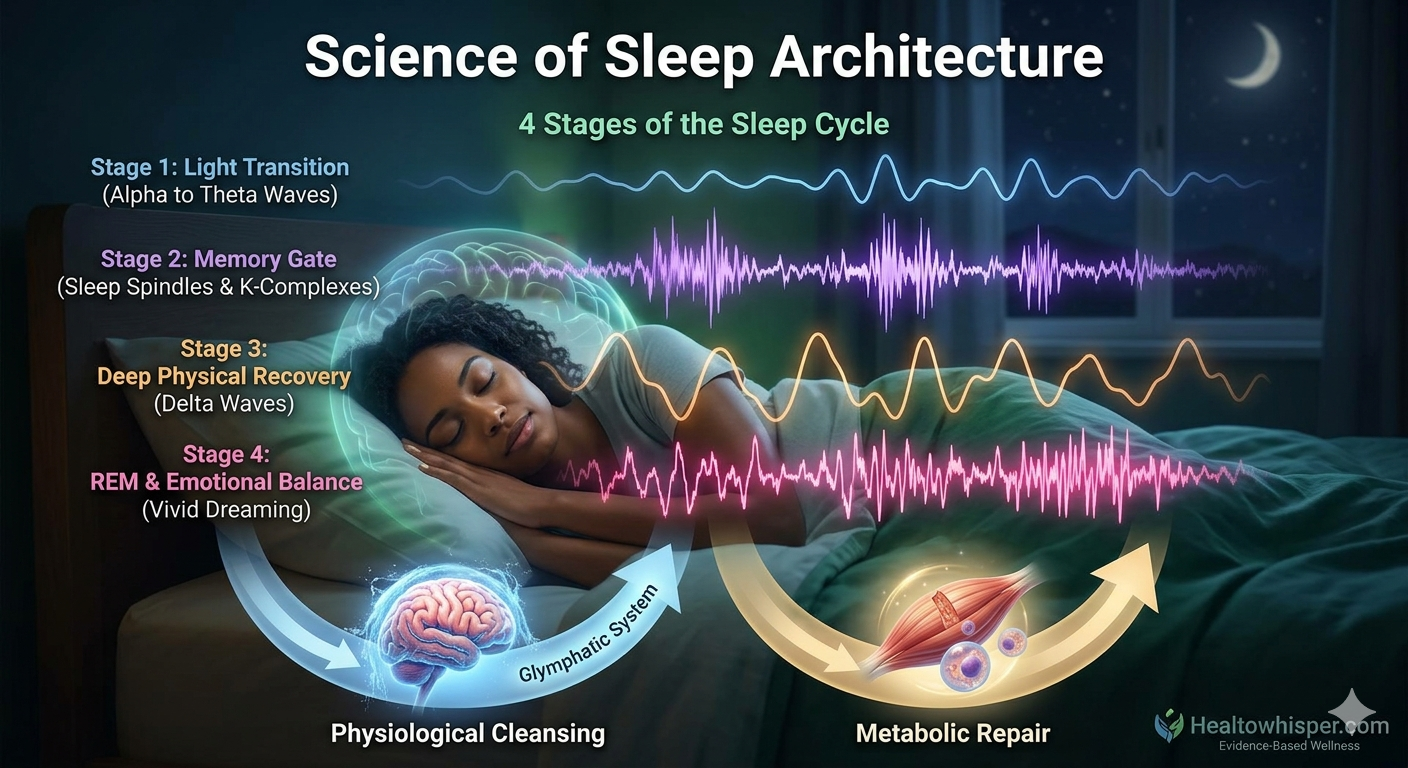
Your brain does not simply turn off. Sleep is an active state. Your nervous system transitions through four unique stages. Each stage provides specific benefits to the body. Some stages repair muscle tissue. Other stages organize your memories. Balance between these stages is essential. Understanding these phases helps you diagnose your own fatigue. Each ninety minute cycle contains a mix of these stages. The proportion of each stage changes as the night progresses. Early cycles contain more deep sleep. Later cycles contain more dream sleep.
Stage N1: The Light Transition
Stage N1 is the lightest phase of rest. This phase represents the transition from wakefulness. Your muscles begin to relax. Your heart rate slows down. Your breathing becomes regular. This phase lasts only a few minutes. You wake up easily during this time. Sudden noises pull you back to reality. Your brain waves begin to shift. Alpha waves change to theta waves. This phase prepares the nervous system for deeper work. You might experience sudden muscle twitches. These are hypnic jerks. Your brain is testing the connection to your limbs. Do not ignore the importance of this entry point. A calm transition into Stage N1 leads to better cycles later in the night. Stress or caffeine can trap you in this phase for too long.
Stage N2: The Memory Gate
You spend nearly half of your night in Stage N2. This phase is longer than Stage N1. Your body temperature drops. Your eyes stop moving. Brain activity slows down. Short bursts of electrical activity occur. These bursts are sleep spindles. Sleep spindles protect your rest from outside interference. These spindles also process new information. Your brain moves data from short term storage to long term storage. This stage is critical for learning. Students need Stage N2 to remember their studies. Athletes need Stage N2 to master new movements. If you cut your rest short, you lose this memory consolidation. You wake up feeling mentally slow. Your brain produces K-complexes here. These waves suppress cortical arousal to keep you asleep.
Stage N3: Deep Physical Recovery
Stage N3 is deep sleep. This phase provides the most physical value. Your brain produces slow delta waves. Blood pressure falls. Breathing slows further. Your body focuses all energy on repair. The pituitary gland releases human growth hormone. This hormone fixes damaged cells. This hormone builds new muscle. Your immune system becomes active. Your body produces cytokines to fight infection. This is the stage where the heart rests. The cardiovascular system slows its pace. Waking up during Stage N3 causes severe grogginess. This feeling is sleep inertia. You need Stage N3 to feel physically powerful. You need this deep rest to prevent illness. Physical athletes prioritize this stage for peak performance.
REM: The Emotional Processor
REM stands for Rapid Eye Movement. This phase differs from the NREM stages. Brain activity increases. Your heart rate rises. Your eyes move quickly behind your lids. This is when you dream. REM sleep handles your emotional health. Your brain processes the stress of your day. This stage helps you solve complex problems. Your body becomes temporary paralyzed during REM. This paralysis prevents you from acting out your dreams. This safety feature keeps you in bed. Lack of REM sleep causes irritability. Lack of REM sleep leads to anxiety. Emotional stability requires consistent REM cycles. Brain scans during REM look similar to scans of people who are awake.
The Chemistry of Sleep Pressure
A chemical called adenosine drives your desire to rest. This chemical builds up in your brain while you are awake. Think of adenosine as a byproduct of brain activity. Every hour of wakefulness increases adenosine levels. High levels create sleep pressure. This pressure makes you feel tired. When you sleep, your brain clears the adenosine. You wake up with low levels. You feel fresh. This cycle repeats every day. The clearance happens primarily during deep N3 sleep. If you miss deep sleep, the adenosine remains. This creates a sleep debt. You feel the weight of this debt in your eyes and head.
Caffeine interferes with this natural system. Caffeine molecules have a similar shape to adenosine molecules. Caffeine fits into the adenosine receptors in your brain. This blocks the sleep signal. Your brain does not know adenosine is high. You feel alert. The adenosine continues to build up behind the caffeine. When the caffeine leaves your system, the adenosine floods your receptors. This causes the afternoon crash. To protect your sleep architecture, limit caffeine. Stop drinking coffee by noon. This allows your body to feel natural sleep pressure by evening. High sleep pressure ensures you fall into Stage N3 quickly.
The Circadian Rhythm and Light Signals
Your body follows a 24 hour clock. This clock is the circadian rhythm. A group of cells in the brain controls this rhythm. These cells are the suprachiasmatic nucleus. Light is the primary signal for this internal clock. Morning sunlight hitting your eyes signals the start of the day. This signal stops melatonin production. This signal starts cortisol production. Cortisol gives you energy. Cortisol wakes your organs. This light exposure sets the timer for the rest of the day. It tells your brain when to start releasing melatonin later.
The absence of light signals the night. Darkness triggers the pineal gland to release melatonin. Melatonin tells your body to prepare for rest. Modern life confuses this system. Blue light from screens mimics the sun. Looking at a phone at midnight tells your brain the sun is up. Melatonin production stops. Your sleep architecture fragments. You stay in light sleep. You miss your deep sleep windows. Avoid blue light two hours before bed. Use dim, warm lights in your home. Respect the biological need for darkness. Wear orange tinted glasses if you must use a screen at night.
The Glymphatic System: Brain Cleaning
Your brain produces waste while you think. These waste products include proteins like beta-amyloid. High levels of these proteins lead to neurological problems. Your brain has a specific cleaning system. This is the glymphatic system. This system is only active during deep sleep. During Stage N3, brain cells shrink. This creates space between cells. Cerebrospinal fluid flows through these spaces. This fluid washes away the waste proteins. This process is a biological dishwasher. Short rest periods prevent this cleaning. You wake up with a foggy mind. Long term sleep loss allows waste to build up. Protecting Stage N3 is essential for brain longevity. A clean brain processes information faster. A clean brain maintains better focus.
Temperature Control for Deep Rest
Your core body temperature must drop to initiate sleep. The body releases heat through the hands and feet. A warm room prevents this cooling. High room temperatures keep you in light sleep. You wake up frequently. Set your thermostat to 65 degrees Fahrenheit. This cool environment supports the transition to Stage N3. Wear socks if your feet are cold. Socks dilate blood vessels. Dilated vessels release heat faster. This trick lowers your core temperature. A cool body sleeps deeper. A cool body stays asleep longer. Use breathable cotton sheets. Avoid synthetic fabrics that trap heat against your skin. Your body temperature should stay low until just before dawn.
Nutrition and Mineral Support
Your diet influences your sleep architecture. Magnesium is a vital mineral for rest. Magnesium helps muscles relax. Magnesium supports the production of GABA. GABA is a neurotransmitter that quiets the brain. Low magnesium levels lead to restless legs. Low levels lead to insomnia. Eat pumpkin seeds. Eat spinach. Eat almonds. Support your nervous system with these foods. Avoid heavy meals before bed. Digestion requires energy. Digestion raises core body temperature. Finish your last meal three hours before you lie down. High blood sugar levels can also disrupt sleep stages. A stable blood sugar level ensures you stay in deep sleep. Avoid sugary snacks in the evening to prevent insulin spikes.
The Physiological Impact of Alcohol
Alcohol is a sedative. Many people use alcohol to fall asleep. This is a mistake. Alcohol ruins sleep architecture. This substance blocks REM sleep. Alcohol also increases heart rate during the night. Your body works to process the toxin. This work prevents deep rest. You wake up feeling exhausted. Dehydration from alcohol further disrupts your cycles. You might fall asleep fast, but the quality of that sleep is low. Alcohol leads to fragmented rest in the second half of the night. You miss the emotional processing of REM. Avoid alcohol in the evening. Real rest requires a clean system. A sober brain moves through every stage correctly.
Exercise and Sleep Pressure
Regular physical activity improves the quality of your rest. Exercise increases the total amount of deep sleep you get at night. It builds up adenosine. This leads to a stronger sleep drive. However, timing is important. Exercise increases your body temperature. It releases adrenaline and cortisol. Doing a heavy workout right before bed will keep you awake. You will stay in Stage N1 or N2 for too long. Aim for morning or afternoon exercise. Give your body time to cool down. Consistency is key. Your body learns to expect rest after a day of movement. Physical exertion is the natural partner to deep recovery.
The Role of the Sleep Environment
Your bedroom should be a sanctuary for rest. Remove all electronics. The presence of a phone triggers the brain to stay alert. The blue light from LEDs disrupts your rhythm. Use blackout curtains. Ensure the room is silent. If you live in a noisy area, use a white noise machine. A consistent sound helps the brain ignore sudden noises like cars or sirens. This protects your Stage N2 spindles. Choose a mattress that supports your spine. If you are uncomfortable, your brain will pull you out of deep sleep to move your body. Physical comfort is a requirement for uninterrupted sleep architecture.
Stress and Cortisol Management
Cortisol is the enemy of sleep. High stress levels keep your body in a state of fight or flight. This prevents the transition into Stage N1. If you are stressed, your brain stays vigilant. It looks for threats. This vigilance blocks deep Stage N3 sleep. Practice relaxation techniques in the evening. Read a paper book. Take a warm bath. The drop in temperature after a bath helps you fall asleep. Journaling helps clear your mind of the day’s worries. If you write down your tasks for tomorrow, your brain can stop looping through them. Lowering your evening cortisol is essential for entering the restorative phases of rest.
Napping and Its Impact
Naps can be useful or harmful. A short 20 minute nap can improve alertness. This is a power nap. It keeps you in light sleep. If you sleep longer, you enter Stage N3. Waking up from deep sleep during the day causes grogginess. Long naps also reduce your sleep pressure. You clear too much adenosine during the day. Then you struggle to fall asleep at night. Your sleep architecture becomes delayed. If you must nap, keep it short. Finish all naps before 3 PM. This protects your evening sleep pressure. It ensures you are ready for a full five cycle night.
Biological Aging and Sleep
As you age, your sleep architecture changes. Older adults often spend less time in Stage N3 deep sleep. The cycles become more fragmented. You wake up more often. This is a natural part of aging, but habits can mitigate the decline. Maintaining a strict schedule becomes even more important. Exposure to bright light during the day helps keep the circadian rhythm strong as the eyes change. Melatonin production may also decrease with age. Discussing these changes with a doctor helps manage the architecture of your rest as you get older.
Cognitive Function and REM Sleep
Your brain requires REM sleep to process complex information. During this phase, the brain creates new neural pathways. These pathways connect new data with old memories. This is why you often wake up with the solution to a problem. Creativity is linked to the amount of REM sleep you achieve. If you cut your sleep short by two hours, you lose the longest REM cycle of the night. This leads to a lack of creativity. It leads to poor decision making. Give your brain the full second half of the night to perform its mental housework. You will be more productive during your waking hours.
Practical Daily Habits for Optimization
Building a strong sleep foundation requires consistency. Follow these steps every day. Wake up at the same time. Get ten minutes of direct sunlight in the morning. This sets your clock. Exercise during the day. Stop caffeine early. Dim your lights after dinner. Put your phone in another room. Keep your bedroom cool and dark. These small changes produce big results. Your brain thrives on routine. Consistency allows your body to predict rest. Prediction improves the quality of every cycle. You will notice an increase in energy. You will notice a sharper memory.
Good health starts with your sleep architecture. Do not settle for poor rest. Understand the phases. Respect the chemistry. Protect your deep sleep. Your brain will stay sharp. Your body will stay strong. Master your cycles tonight. Wake up refreshed tomorrow. Your long term health depends on the quality of these ninety minute windows. Invest in your rest today for a better future.
Disclaimer. The information on Healtowhisper serves educational purposes. This content is not medical advice. This content is not a substitute for professional diagnosis. This content is not a substitute for professional treatment. Always consult your doctor before changing your health routine. Never ignore professional medical advice because of something you read here.


 Admin
Admin